- What is Remote Patient Monitoring?
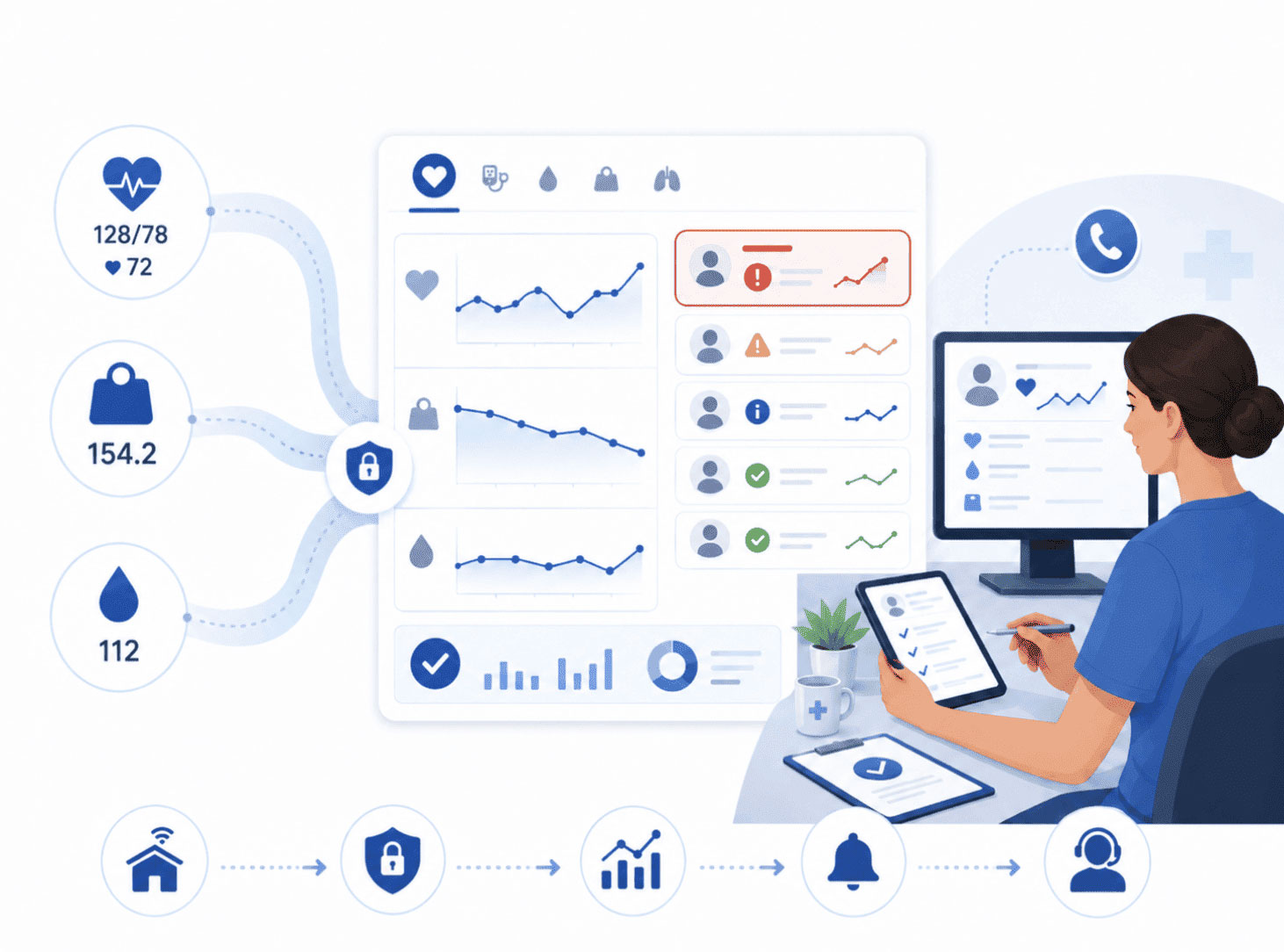
Remote patient monitoring, or RPM, allows healthcare providers to monitor physiologic information such as blood pressure, weight, blood glucose, and pulse oximetry while patients are at home. Connected medical devices automatically transmit readings to the patient’s care team, helping providers identify concerning changes and respond between office visits.
- What types of patients can benefit from RPM?
RPM can support patients with chronic or acute conditions that require ongoing monitoring. Common use cases include hypertension, heart failure, diabetes, obesity, chronic kidney disease, COPD, and maternal hypertension.
The provider determines whether RPM is medically necessary and appropriate for each patient.
- How does the Carematix RPM program work?
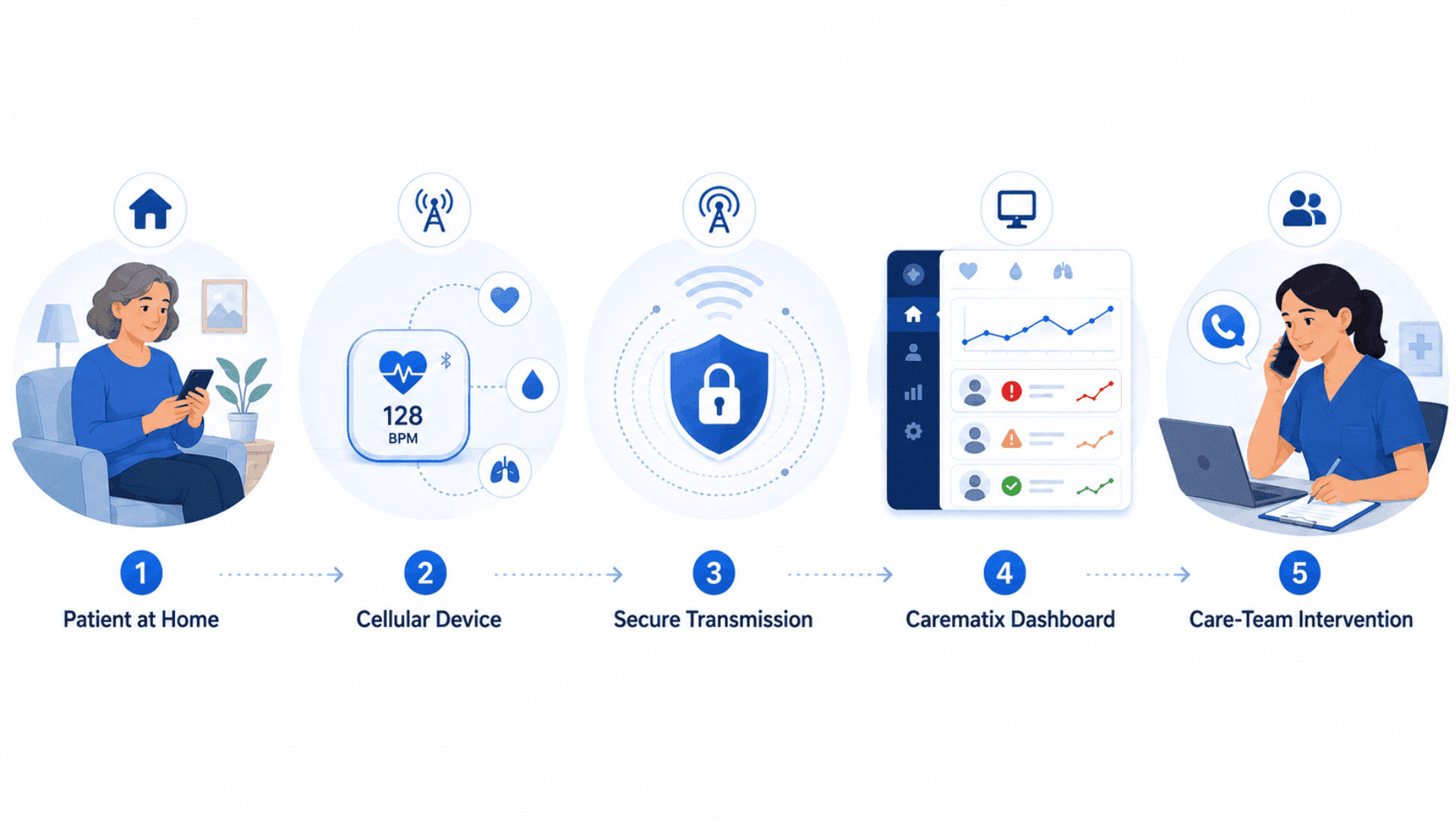
Patients receive a cellular-enabled device selected for their clinical needs. Each time a patient takes a reading, the data is transmitted automatically to the Carematix platform.
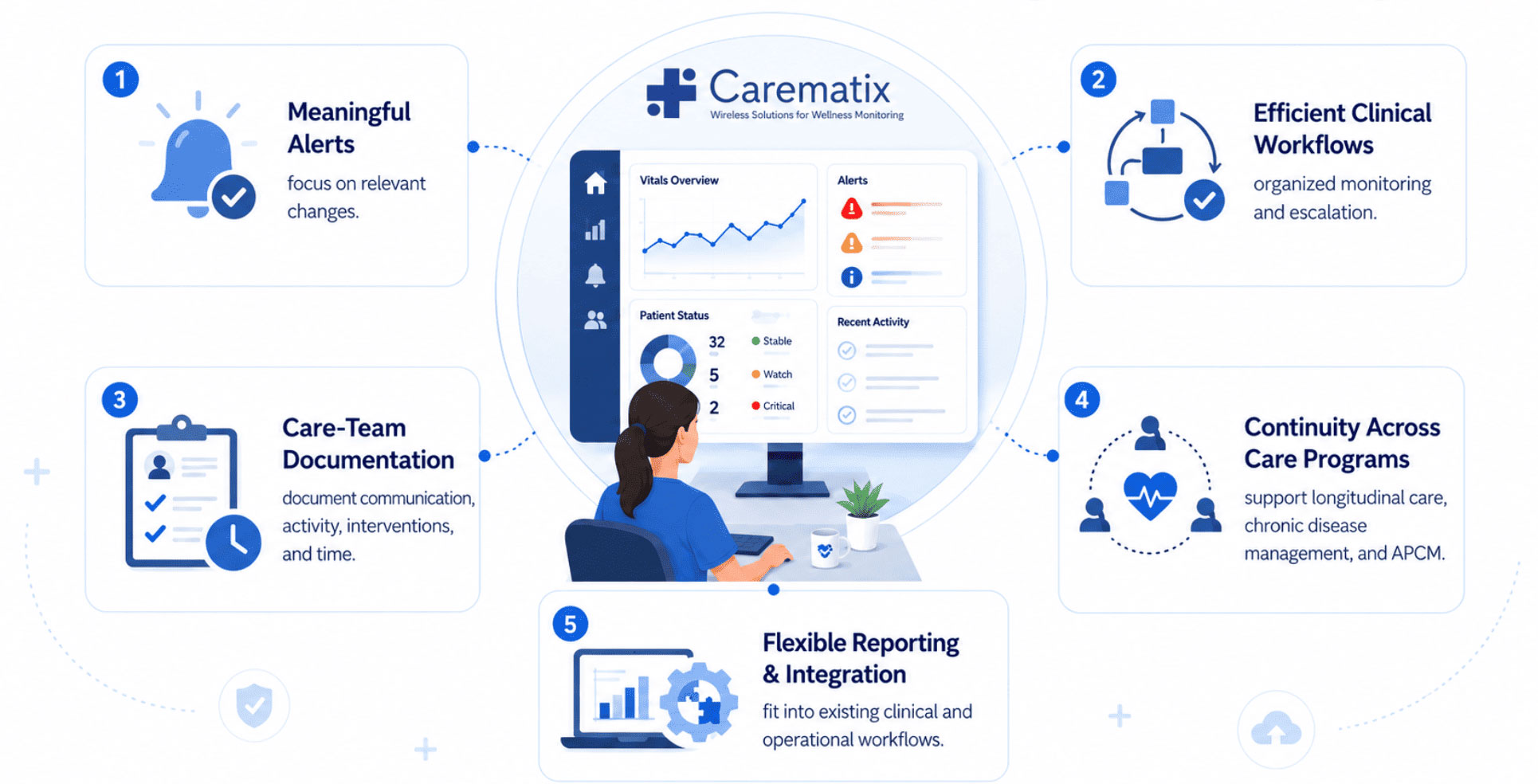
Care teams gain a clear view of patient trends, can quickly identify who may need attention, and document outreach, interventions, and follow-up within one structured workflow. Every action is time-stamped, creating a complete audit trail that supports continuity of care, program oversight, and reimbursement.
- Do patients need a smartphone, app, Bluetooth, or home internet?
No. Carematix cellular devices are designed to transmit readings without requiring a smartphone, mobile application, Bluetooth pairing, or home Wi-Fi.
This helps make remote monitoring more accessible for older adults, rural patients, and individuals who may be uncomfortable using consumer technology.
- What devices are available?
Carematix supports connected devices for commonly monitored physiologic measurements, including, but not limited to:
- Blood pressure
- Weight
- Blood glucose
- Pulse oximetry
Device selection should be based on the patient population, clinical objectives, and conditions being managed.
- How does RPM help providers manage patients between visits?
Traditional care provides only a snapshot of the patient’s condition during an office visit. RPM provides visibility into changes occurring at home, where patients spend most of their time.
Reviewing readings and trends between visits can help care teams identify adherence concerns, worsening measurements, and other changes that may warrant follow-up.
- Will RPM create more work for our clinical staff?
RPM does not require the provider to personally review readings or manage the day-to-day monitoring process. Routine monitoring and patient outreach can be performed by staff under the provider’s general supervision and according to established clinical protocols.
Carematix organizes incoming data, identifies patients who may need attention, and supports configurable alerts and escalation workflows. Clinical staff can focus on the patients who require follow-up, while the provider becomes involved only when a clinical issue requires evaluation, treatment decisions, or escalation.
This allows organizations to expand care between visits without adding unnecessary work to the provider’s daily schedule.
- How does Carematix help reduce alert fatigue?
Carematix helps care teams distinguish isolated readings from patterns that may require attention. Configurable parameters, patient trends, and structured workflows allow organizations to focus on clinically meaningful information rather than reacting to every transmitted measurement.
Clinical thresholds and escalation protocols remain under the direction of the healthcare organization.
- Can Carematix integrate with our EHR?
Carematix supports several approaches to EHR connectivity, including integration through standards-based interfaces (HL7, FHIR, JSON) and the delivery of monthly patient reports for inclusion in the medical record.
The appropriate approach depends on the organization’s EHR, technical environment, workflow requirements, and desired level of integration.
- How is remote patient monitoring reimbursed?
Medicare reimburses eligible RPM services under several CPT codes that may account for:
- Patient setup and education
- Connected device supply and transmission
- Treatment-management time
- Interactive communication with the patient or caregiver
Billing requirements vary by code and may include medical necessity, patient consent, use of an eligible connected medical device, transmitted physiologic data, documented management time, and practitioner oversight.
Commercial insurance, Medicare Advantage, and Medicaid coverage vary by payer and state. Organizations should confirm current requirements with their billing and compliance teams.
- Does Medicare RPM still require 16 days of readings?
Beginning in 2026, Medicare recognizes separate device-supply reporting for patients who transmit readings on 2–15 days and patients who transmit readings on 16 or more days during a 30-day period.
The number of transmission days only affects the applicable device-supply code. Treatment-management services have separate requirements based on documented management time and interactive communication.
- Does every patient need 20 minutes of RPM management each month?
No. Beginning in 2026, Medicare includes a treatment-management option for 10–19 minutes as well as the established codes for 20 minutes and additional increments of time.
A service should be billed only when its specific requirements are met and the documented work was medically necessary.
- Can RPM be combined with Advanced Primary Care Management?
When payer and patient eligibility requirements are met, RPM may complement Advanced Primary Care Management, or APCM.
APCM supports broader care coordination and ongoing management, while RPM provides objective physiologic information from the patient’s home. Together, they can give care teams greater visibility between visits and strengthen longitudinal chronic care workflows.
Organizations should confirm coding compatibility and billing requirements for each patient and payer.
- How quickly can an RPM program be implemented?
Implementation time depends on program size, staffing, device selection, workflow design, patient identification, and integration requirements, but most clients are up and running in weeks, not months.
Carematix works with the organization to establish the platform, configure devices and workflows, train staff, and prepare for patient enrollment. A focused initial rollout can help the organization validate its clinical and operational model before expanding.
- Can an organization start with a small RPM program?
Yes. Many organizations begin with a defined patient population, condition, clinic, or care team.
A focused rollout allows the organization to evaluate patient participation, staff capacity, clinical workflows, documentation, reimbursement, and outcomes before scaling the program more broadly.
- How should patients be selected for RPM?
Strong candidates are patients who have a condition that benefits from monitoring, can use the prescribed device, and are likely to engage with the program.
Successful programs typically use defined eligibility criteria and introduce RPM during an existing patient interaction, allowing the provider to explain the clinical purpose, obtain consent, and reinforce expectations.
- What should healthcare organizations look for in an RPM partner?
An effective RPM partner should provide more than connected devices. Organizations should evaluate:
- Ease of use for patients
- Reliable automatic transmission
- Clinical workflow flexibility
- Patient engagement monitoring
- Alert and escalation management
- Documentation and auditability
- EHR integration options
- Implementation and ongoing support
- Transparent pricing
- Ability to scale
The goal is not simply to collect more data. It is to convert home-based measurements into sustainable clinical workflows and meaningful patient care.
- What makes Carematix different?
Carematix brings together connected cellular devices, patient monitoring, configurable clinical workflows, documentation tools, implementation support, and integration options in one RPM solution.
Our approach is designed to make RPM easier for patients to use, more manageable for care teams, and more sustainable for healthcare organizations.